

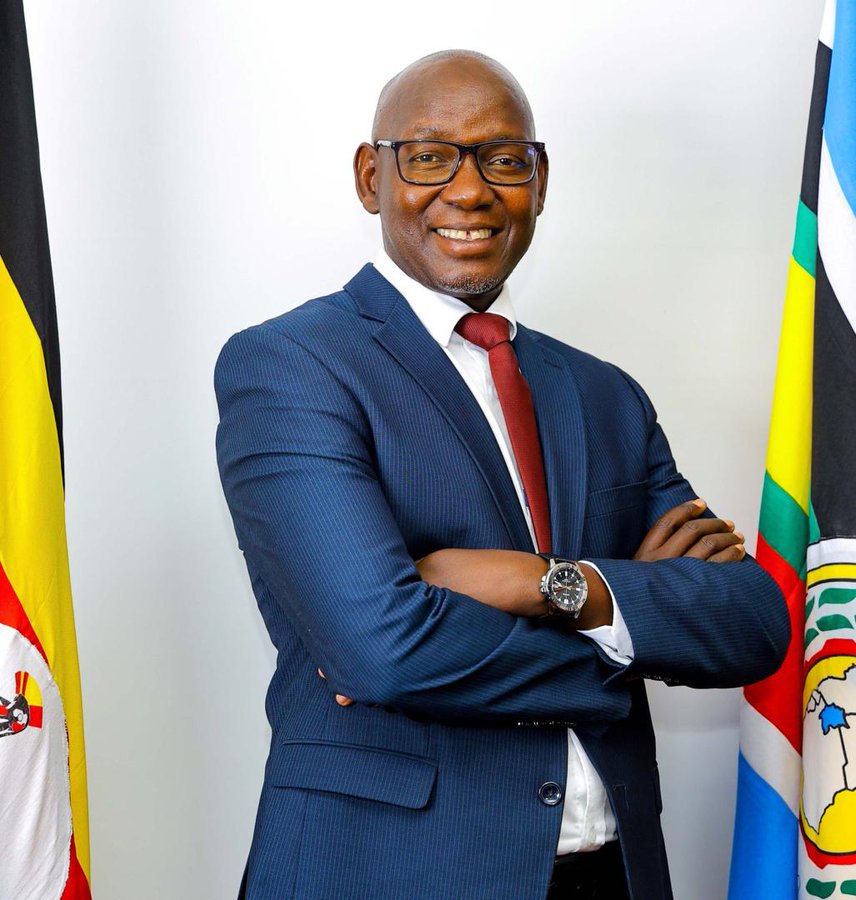
Lino Anguzu – Director of Public Prosecutions – Uganda
Statement by the Director of Public Prosecutions on Agenda Item 5 at the 15th UN Congress on Crime Prevention and Criminal Justice (Abu Dhabi, UAE)
Distinguished Chair, Excellencies, Delegates, Representatives of Civil Society, ladies and gentlemen.
The Republic of Uganda welcomes the opportunity to contribute to this important discussion on Addressing and countering crime-including organized crime and terrorism in all its forms and manifestations-in new, emerging and evolving forms.
Uganda recognises that organised crime and terrorism are rapidly evolving. Criminal and terrorist networks are increasingly exploiting digital technologies, artificial intelligence, encrypted communications, virtual assets and cross-border financial systems to expand their reach, conceal illicit proceeds and operate across jurisdictions.
Uganda notes that this Congress’s own background paper on this agenda item rightly identifies the increasing intersection of organised crime with corruption and terrorism, necessitating holistic responses and inter-agency collaboration. Uganda is accordingly developing a National Coordination Centre for Organised Crime to close precisely this coordination gap domestically. We further underscore the paper’s call for States Parties to prioritise their active involvement in country reviews under the Organized Crime Convention’s Review Mechanism and to allocate adequate resources to accelerate the review process; Uganda’s own review, conducted by Eswatini and Lithuania, is before the Implementation Review Group in Vienna this October, and we consider sustained, adequately resourced review processes essential to converting analysis into action.
The UNODC Strategic Analysis of Organised Crime in Uganda highlights the complex and interconnected nature of organised criminal activity, including its links to transnational trafficking, illicit financial flows and cyber-enabled crime. These developments require responses that are intelligence-led, technology-enabled and supported by effective cooperation across institutions and borders.
Uganda’s experience demonstrates both progress and continuing challenges. According to the Justice, Law and Order Sector Annual Report for FY 2024/2025, the national crime rate declined from 502 to 476 cases per 100,000 population, while the criminal justice system registered a 75 per cent conviction rate. However, the case disposal rate stood at 59.7 per cent, reflecting continuing pressures on the justice system, including capacity constraints.
According to the Uganda Police Force Annual Crime Report 2025, 196,405 crimes were reported in 2025, compared to 218,715 in 2024, representing a reduction of 10.2 per cent. The national crime rate also declined from 476 to 427.8 crimes per 100,000 population.
The criminal justice response resulted in 115,301 cases being submitted to the Office of the Director of Public Prosecutions, 79,291 being taken to court, and 24,899 cases securing convictions.
However, emerging and evolving forms of crime continue to present significant challenges. In 2025, 412 cybercrime cases were reported, while 18 money laundering cases involving approximately 20 billion Uganda Shillings and one terrorism financing case involving approximately 1.2 billion Uganda Shillings were reported to Police.
In response, Uganda has strengthened its institutional architecture through specialised structures within the Uganda Police Force, the Office of the Director of Public Prosecutions, the Financial Intelligence Authority and the Judiciary to address terrorism and related offences, money laundering and other financial crimes, cybercrime, international cooperation in criminal matters, and asset tracing and recovery.
The Uganda Police Force has also intensified intelligence-led operations against criminal syndicates, working with the ODPP, FIA, and Judiciary to investigate organised and transnational crime and disrupt criminal networks.
Uganda calls for sustained, practical and demand-driven capacity building for prosecutors, investigators, judges and forensic specialists, particularly in developing countries, to respond effectively to cyber-enabled crime, terrorism financing and other emerging criminal threats.
We recognise the importance of closer cooperation among justice, financial intelligence, and law enforcement institutions, and call upon Member States, UNODC and international partners to strengthen information sharing, operational cooperation, and capacity development.
Uganda remains committed to working with all Member States and partners to build criminal justice systems and come up with solutions capable of anticipating, preventing, investigating and prosecuting current as well as emerging and evolving forms of crimes.
I thank you. Date: 29th September 2026 | Abu Dhabi, United Arab Emirates